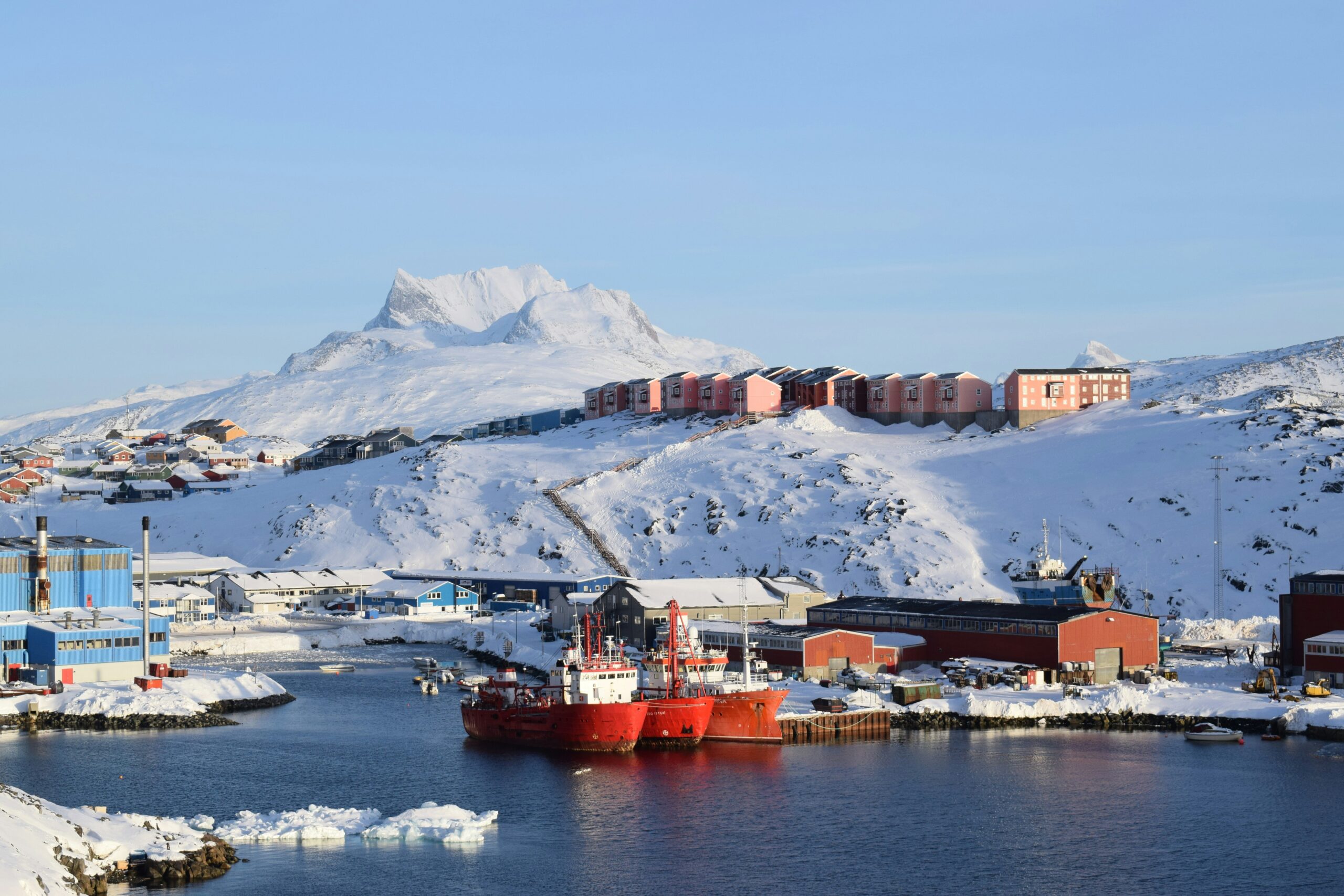


Recently, Greenland has become a key topic for Europe, as the island has found itself at the center of the geopolitical rivalry between the United States and China. Although formally part of the Kingdom of Denmark, Greenland’s strategic location and vast natural resources have established it as an object of direct interest for global superpowers, which should motivate the European Union to rethink its priorities and presence in the region.
Greenland’s Critical Resources
Greenland possesses deposits of rare earth elements roughly comparable in volume to those of China—the current dominant player in the sector, which enjoys a significant competitive advantage. According to data from the U.S. Geological Survey, Greenland holds the largest undeveloped rare earth element deposits in the world. Estimates suggest that the island has around 1.5 million tons of proven reserves, while some projections indicate potential resources in the region could exceed 38.5 million tons of rare earth oxides. By comparison, China’s proven reserves stand at approximately 44 million tons.
Greenland is also among the ten countries in the world with the largest uranium deposits, with some estimates even placing it in the top five globally. Additionally, according to U.S. assessments, roughly 13% of the world’s undiscovered oil and 30% of undiscovered natural gas are located in the Arctic, with a significant portion in Greenlandic waters.
All of these resources are currently, de facto, under the control of the EU, and their effective exploitation would contribute significantly to achieving the Union’s sought-after strategic autonomy. Without reliable access to such resources, the EU’s stated ambitions for a green transition and energy independence would be unattainable. At present, Europe is dangerously dependent on China for over 90% of its rare earth imports. Should Brussels allow Greenland to fall under Washington’s control or into China’s economic orbit, the EU risks losing sovereignty over its own technological future and cementing its role as a client rather than an independent actor on the global stage.
It should, however, be noted that these resources are considerably more difficult to extract. From the U.S. perspective, this does not pose a major problem—the example of shale gas and oil serves as evidence. For a long time, these resources were considered uneconomical to exploit until technological breakthroughs led to the so-called “shale revolution”, returning the United States to energy leadership. In this context, Greenland can also be seen as a testing ground for Elon Musk’s ambitions for colonizing Mars.
The Global Significance of the Arctic Sea Routes
Due to melting ice in the North Pole, the Northern Sea Route is becoming a practical alternative to routes through the Panama and Suez Canals. It is the shortest route between Europe and Asia, at least 30–40% shorter than the aforementioned alternatives. Two main routes can be observed on the Arctic map—or more precisely, one maritime corridor that can be conditionally divided into two sections. One section is entirely under Russian control, while the other is more fragmented and falls under the jurisdiction of several NATO member states.
Control over access to northern sea lanes is also crucial. The United States, for example, has access to the Bering Strait via Alaska, which constitutes one of the main entries into the Arctic. The other key entry, however, lies in the Atlantic—between Greenland and Norway, with the United Kingdom and Iceland also having access in this area. In other words, regarding the “western” entry into the Arctic, the U.S. lacks direct control and must rely on its NATO allies. Clearly, a country controlling both entries would gain extremely significant global influence.
Additionally, Russia exercises unified and consolidated control over its “half” of the Arctic space, whereas Western control is considerably more fragmented. The U.S. aims to approach the degree of influence and operational control that Russia has already achieved in its sector—which explains the periodic signals regarding potential engagement with Greenland.
War or Diplomacy?
The Greenland case illustrates that while the U.S. and the EU are allies, their strategic interests do not always align. In reality, they often diverge, with Europe historically taking a relatively subordinate role in this dynamic. However, the EU should not allow the U.S. to annex Greenland. Control over the northern Atlantic constitutes a highly powerful lever of influence that Brussels could use not only against Washington but also toward the rest of the world. Direct confrontation between the EU and the U.S. over Greenland could lead to a deep rift within NATO or at least internal tensions in the alliance, and, in the longer term, further weaken the EU on the international stage and increase its dependence on external powers.
At the same time, neither Denmark nor Europe is in a position to engage in direct military confrontation with the U.S., though such a scenario is unlikely. A more realistic scenario would involve Greenland separating from Denmark as a result of a favorable economic deal proposed by the U.S. Currently, Greenland is highly dependent on Denmark, receiving an annual subsidy of approximately $600 million. Crucially, Washington could offer significantly larger sums than Denmark could afford on its own.
It should be noted that if Trump were to enter into direct negotiations with Greenland, this would practically recognize it as an autonomous and equal entity rather than merely a Danish territory. This aligns with his characteristic approach toward Europe: he has repeatedly shown a preference for bilateral negotiations with individual European countries rather than engaging with the EU as a single bloc. Washington could also use the opportunity to appeal to greater democracy and respect for Greenland’s sovereign choice.
The European Proposal
In this sense, the EU should not allow the initiative to be taken from it, and its current foreign policy priority should be the (re)integration of Greenland into the Union. A little-known fact is that in 1985, Greenland became the first territory to leave the EU—not in its current form, but as part of the European Economic Community. This occurred due to disagreements over fishing quotas, with fish still accounting for approximately 90% of the island’s exports today.
In this context, the EU could offer Greenland accession with an exemption from the Common Fisheries Policy, while simultaneously presenting a strategy for long-term industrial and infrastructural development where the island significantly lags behind. European funds could be used to overcome these deficits, making such an investment strategically beneficial not only for Greenland itself but for the entire EU.
To prevent a potential “divide and rule” scenario by the U.S., the EU should act proactively. If the Union truly seeks strategic autonomy and the protection of its own interests, the accession of other candidate countries should temporarily take a back seat until Greenland is brought back into the fold. Due to the small scale of the island in terms of economy and population, the EU could offer an extremely attractive economic deal, even given the current limited financial capacity of its member states. Some temporary economic sacrifices would be inevitable, but in the long run, they would pay off manifold.

Recently, Greenland has become a key topic for Europe, as the island has found itself at the center of the geopolitical rivalry between the United States and China. Although formally part of the Kingdom of Denmark, Greenland’s strategic location and vast natural resources have established it as an object of direct interest for global superpowers, […]